Saturday, 10 May 2014

ART101 appendix 1 - images

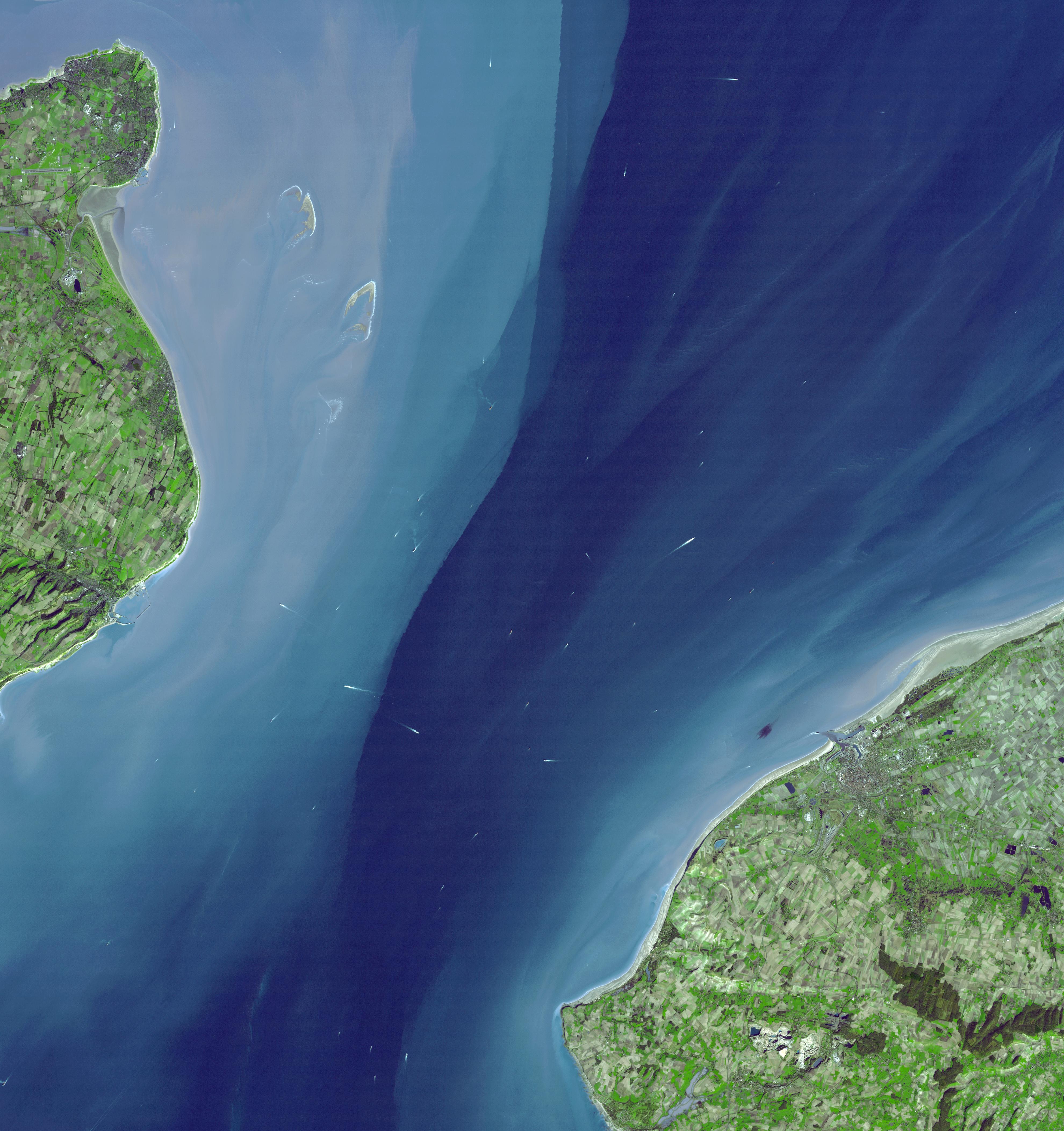
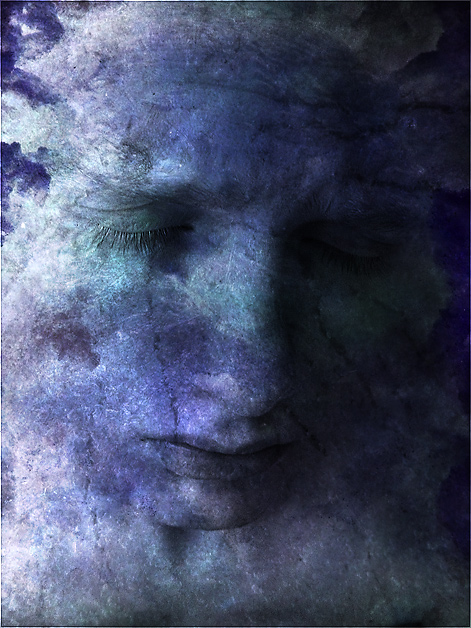
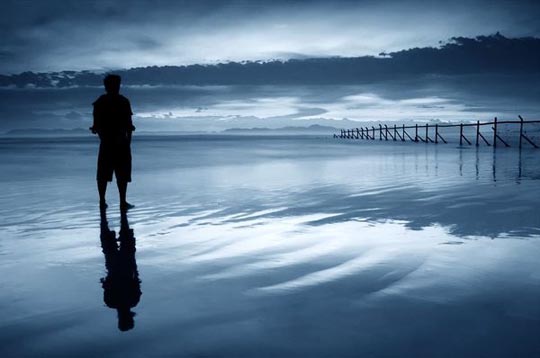
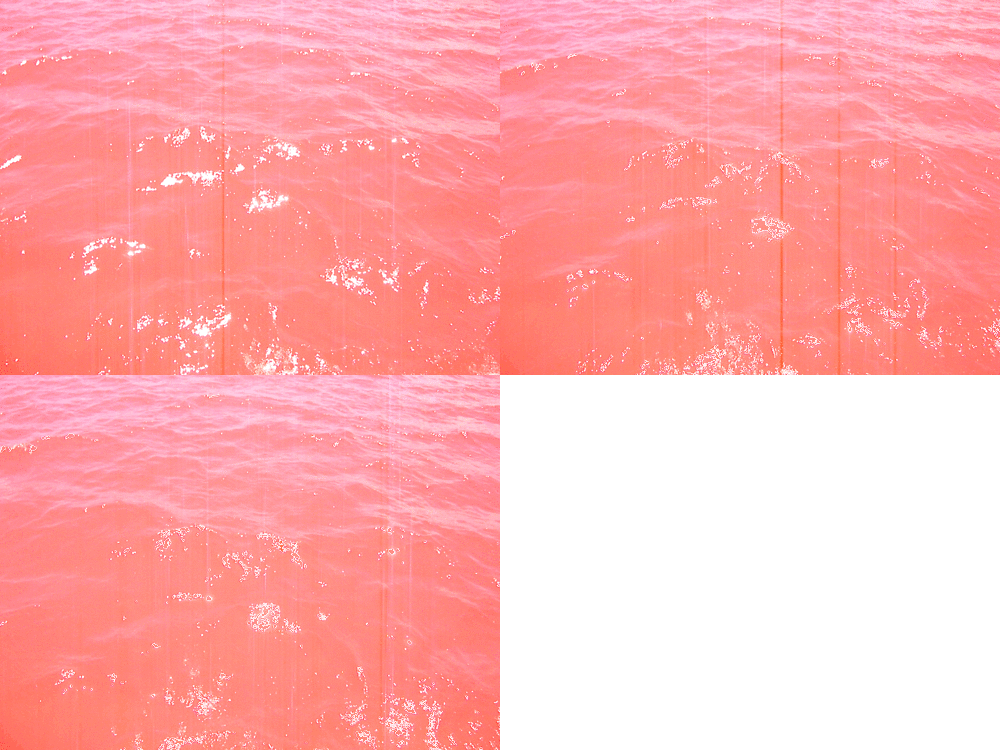
As progress with ART101 continues, what follows is an assortment of stock images to be used in combination with the film footage:


Tuesday, 6 May 2014

Lisa Barnard - Chateau Despair


­­­­­


From the book Chateau Despair, 2013

Lisa Barnard’s photographic practice is connected to both fine art and documentary genres. Her work connects her interests in psychological aesthetics, the limits of photographic film alongside the documentation of both the real and the imaginary.
http://lisabarnard.co.uk/resources/biography/

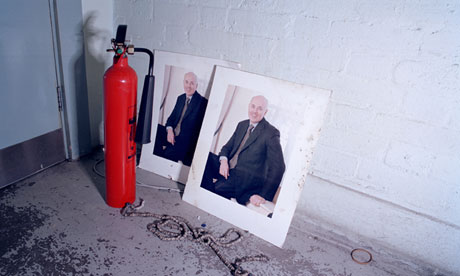
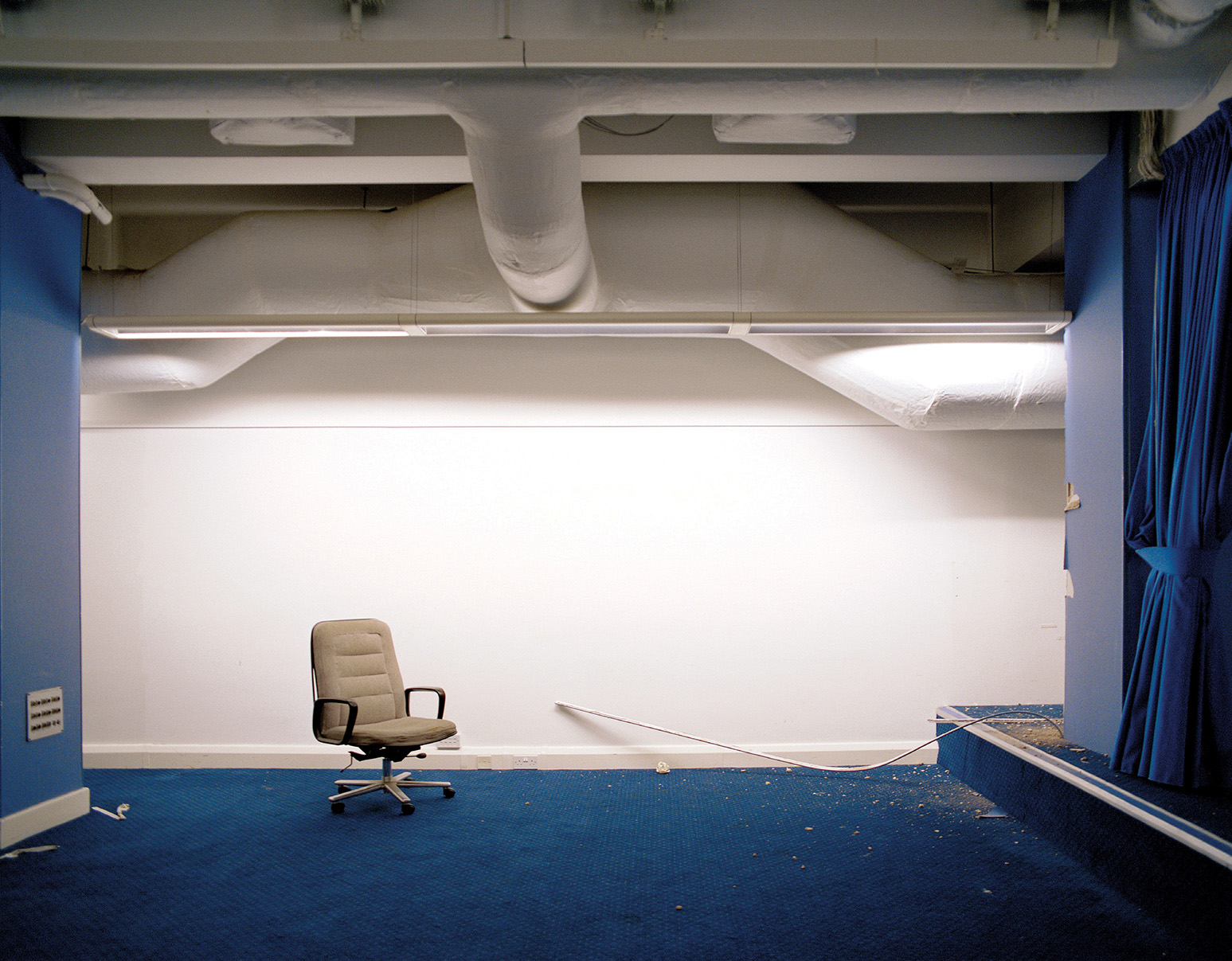
This publication is made up of a series of photographs taken inside the abandoned Conservative party headquarters at 32 Smith Square. Award-winning artist Lisa Barnard was granted access to the site in 2009 and documented the building and found objects.

32 Smith Square was Conservative Central Office from 1958 to 2004.The building is synonymous with Margaret Thatcher smiling and waving out of the window on the 2nd floor after winning the elections of 1979, 1983 and 1987. However, by 2004 the building became known as ‘Chateau Despair’ to its inhabitants, prior to the Conservatives’ move to Victoria Street. They left behind a mausoleum containing nearly 50 years of their political history, etched on its surfaces and discarded in its corners.

This book features previously unseen photographs of the interior documenting the dulled shades of corporate blue, stained carpets, peeling paintwork and discarded iconography of past alliances. Carefully choreographed portraits of a smiling Thatcher, unearthed in an old cupboard, punctuate the book, jarring with the shabby interior. The book also includes photographs of the objects, or remnants, Barnard found in the building including a blue rosette, an internal envelope, an ornate silver spoon, a balloon and a strip of film negative.
http://www.gostbooks.com/books/31/chateau-despair

Thatcher fans should avoid Chateau Despair. They will not like it. In this strange but interesting limited edition, the photographer Lisa Barnard has collected some of her prints of the interior of 32 Smith Square, the building that was Conservative central office when Maggie was in her prime, and which was left unoccupied for a long time after the Tories deserted it nearly 10 years ago. It was here that her campaigns were plotted. It was from here that she would first appear on television on election night to celebrate her victories, waving from the balcony as adoring party workers chanted "four more years!". Treating the building and its forgotten contents as a sort of political mausoleum, Barnard shows us shabby and empty blue spaces, stained carpets and crumbling plasterboard, stopped clocks, empty chairs and abandoned shoes. The detritus of old political battles is represented by images of shrivelled campaign materials, faded rosettes and unblown balloons. The effect is quite spooky. These haunted images are punctuated by portraits, retrieved from a long forgotten cupboard, of the former chatelaine. There's the face that ruled Britain for more than a decade in the pose that became so embedded in the national consciousness: the purposeful lips, the regimented hair, the signature pearls clipped to her ears and hung around her neck, and the drilling blue eyes which François Mitterrand once likened to Caligula. The photos are in a corrupted state, aged and bleached, providing a visual metaphor for the passing of glory and the fading of pomp.
Andrew Rawnsley
http://www.theguardian.com/books/2013/mar/25/chateau-despair-iron-lady-shephard-review

Lisa Barnard’s new photobook Chateau Despair was born out of a commissioned photo-project in which she documented the abandoned Conservative Central Office at 32 Smith Square – HQ for the Tories from 1958 to 2004. The majority of images in the book are interior photographs of a building that has lost its place in the world. Scratched walls, empty hallways, missing appliances – these are the signifiers of architectural decline. The overall impression of malaise is underscored by the colour blue, the official colour of the Conservative Party. The images are purposefully ‘cold’: both in terms of colour symbolism and in terms of Barnard’s dispassionate photographic methodology.

Barnard makes some surprising discoveries in the abandoned building: a forgotten pair of shoes, a tear in the shape of a laughing mouth cut into a studio backdrop, or, what appears to be, a bright red rocket leaning against the wall. These photographs, subtly humorous yet still matter-of-fact depictions of an interior space, are strongly reminiscent of the work by the Canadian photographer Lynne Cohen. Despite the lack of people in these images, the presence of man is emphasized by these quirky interventions.

Looming over this body of work are a number of scanned images depicting the former Conservative Prime Minister Margaret Thatcher. Her status as political and ideological icon in the UK is emphasized by including several seemingly identical images of her. Although in each image she is shown with the same bright red lipstick, the same immaculate hair, and the same confident smile into the camera, each image differs slightly from the others, as well as to the extent it has physically deteriorated. Watermarks and dirt are creeping up on them, while a fingerprint gives an indication on the actual size of the original photograph. The decline of the building is thus mirrored by the imperfections represented in the damaged portrait of Thatcher.

Inasmuch as the photobook documents the remains of a once-thriving party headquarters, the project also alludes to Thatcher’s immense impact on political, economic and social issues in the UK. Her knowing smile not only affects our reading of the interior photographs of Chateau Despair, it equally affects our understanding of current debates such as those on housing, social security, immigration, foreign relations or economic policies. Her presence is akin to that of a phantom. This is particularly the case with regard to the current Conservative-led coalition government that consistently tries to locate its own position in relation to the Thatcher years.

In spite of the re-emergence of Conservatism in the UK, the photographs strongly allude to the collapse of an ideological and political framework. The abandoned rooms at 32 Smith Square perhaps evoke comparisons with representations of other fallen regimes such as Daniel and Geo Fuchs’ photographic series on STASI buildings in the former GDR. To the back of the book is a collection of fifteen scanned images of objects Barnard has found in the building. Chateau Despair fulfills the archaeological function of archiving a vision from the past.
Marco Bohr
http://visualcultureblog.com/2013/03/chateau-despair-by-lisa-barnard/

Chateau Despair by Lisa Barnard from GOST Books on Vimeo.

Saturday, 3 May 2014

treasure island


The Rotten Ass, 1928

Salvador Dalí - The Rotten Ass

A morally-inclined action could be provoked by the violently paranoid wish to render confusion systematic.

Paranoia itself, especially when seen as a mechanism of strength and power, leads us to the possibility of a mental crisis that is perhaps as serious as, though diametrically opposed to, the crisis induced by hallucination.

The moment is near, I believe, when, by means of a deliberately paranoid thought process (as through automatism and other passive states), it will be possible to systematize confusion and contribute to the total discrediting of the world of reality.

The new simulacra that paranoid thought could suddenly reveal will not only have their roots in the unconscious—more importantly, the strength of paranoid power will be placed at the service of the unconscious.

These threatening simulacra will act cleverly and corrosively with the clarity of everyday physical forms, in such a way that our minds, with their distinctive capacity for self-censorship, will dream of the old machinery of metaphysics and almost willingly confound this with the very essence of nature, which, according to Heraclitus, likes to hide.

As far removed as possible from the sensory phenomena that can be thought of as more or less connected to hallucination, paranoid activity always makes use of verifiable, recognizable materials. It is enough for someone in the grip of an interpretive delirium to link the meanings of heterogeneous paintings that happen to hang on the same wall for the real existence of such a link to become undeniable. Paranoia uses the external world to validate an obsessive idea, with the troubling result of validating its reality to others. The reality of the external world serves as illustration and proof of the paranoid idea and is subservient to the reality in our minds.

Physicians uniformly acknowledge the quickness of mind and incomparable subtlety of many paranoiacs, who, by seizing on themes and facts with a finesse that escapes normal people, often reach conclusions that cannot be dismissed or contradicted and which almost always defy psychological analysis.

It is a clearly paranoid process that has made it possible to achieve a double image—that is, a representation of an object which becomes, without the slightest figurative or anatomical modification, the representation of another, absolutely different object, it too devoid of any distortion or abnormality that could indicate some sort of manipulation.

This double image was made possible by the violence of paranoid thought, which cunningly and skillfully availed itself of the requisite number of pretexts, coincidences, and so forth in order to reveal the second image, which in this instance takes the place of the obsessive idea.

The double image (an example of which might be an image of a horse that is also an image of a woman) can be extended, following the paranoid process—the existence of another obsessive idea being sufficient cause for the appearance of a third image (of a lion, for example), and so on, with the total number of images limited solely by the paranoid capacity of the individual's thought.

I subject to materialist scrutiny the sort of mental crisis that such an image can provoke. I subject to the same scrutiny the still more complex problem of determining which such image is most likely to exist if one allows desire to intervene, as well as the more difficult and more general problem of determining whether the series of such representations has a limit or whether, as we have every reason to believe, such a limit either does not exist or whether its existence depends solely on the paranoid capacity of each individual.

Assuming that no other considerations intervene, the foregoing allows me at the very least to assert that images of reality itself depend on the magnitude of our paranoid faculty. Theoretically, moreover, an individual endowed with a paranoid faculty of sufficient magnitude might at will perceive a series of changes in the shape of a real object—as in the case of voluntary hallucination—but with the more destructive peculiarity that the various forms assumed by the object can be seen and verified by anyone, once pointed out by the paranoiac.

The paranoid mechanism, which gives rise to the multiple figurative image, is the key to understanding the nature and origin of simulacra, whose fury dominates the disguise beneath which the manifold appearances of the concrete conceal themselves. Indeed, it is the fury and traumatic nature of simulacra vis-a-vis reality and the absence of the slightest osmosis between reality and its simulacra that lead to the conclusion that comparison of any sort is a (poetic) impossibility. It would be possible to compare two things only if it were possible to conceive of a lack of any type of conscious or unconscious connection between them. Made tangible, such a comparison would clearly embody our idea of the gratuitous.

Because simulacra are inconsistent with reality, and because the gratuitous can exist in their presence, they can easily take the form of reality, while reality can in turn adapt itself to the violence of the simulacra, which one form of materialist thought stupidly confounds with real violence.*

Nothing can prevent me from acknowledging the multiple presence of simulacra in the example of the multiple image, even if one of its states takes on the appearance of a rotten ass, and even if this ass is truly and horribly rotten, covered with thousands of flies and ants; since in this case, moreover, one cannot assume that the distinct states of the image have any intrinsic significance apart from the notion of time, nothing can convince me that this cruel putrefaction of the ass is anything other than the harsh, blinding reflection of new precious stones.

And there's no way to know that the much-desired "treasure island" isn't hiding behind the three major simulacra—shit, blood, and putrefaction.

As connoisseurs of simulacra, we have long since learned to recognize the image of desire behind the simulacra of terror and even the dawn of "golden ages" behind ignominious scatological simulacra. 

The acceptance of simulacra whose reality painstakingly strives to imitate appearances leads us to desire ideal things.

Perhaps no simulacrum has created structures to which the word ideal applies more exactly than the great simulacrum that constitutes the disruptive ornamental architecture of the Modern Style. No collective effort has managed to create a dream world as pure or as disturbing as these modern-style buildings that stand on the fringes of architecture as true realizations of solidified desire, in which the cruelest, most violent automatism achingly reveals a hatred of reality and a need to seek refuge in an ideal world that is common in childhood neurosis.

This is what we can still love, this imposing mass of cold, maniacal buildings scattered across Europe, scorned and neglected by anthologies and studies. This is all we need to combat our piggish contemporary aestheticians, who defend execrable "modern art." Indeed, this is all we need to combat the entire history of art.

Art critics, artists, and so forth need to be told once and for all that they should expect nothing from the new surrealist images but disappointment, disagreeableness, and repugnance. Far removed from all "plastic investigations" and other such imbecilities, the new images of surrealism will increasingly take on the forms and colors of demoralization and confusion. The day is not far off when a painting will have no value other than that of a simple moral yet gratuitous act.

The new images, as functional forms of thought, will freely follow the penchants of desire, even as they are violently repressed. The mortal activity of these new images can still, along with other surrealist activities, contribute to the destruction of reality for the benefit of those who, in opposition to infamous and abominable ideals of every sort, aesthetic, humanitarian, philosophical, and so forth, are leading us back to the limpid sources of masturbation, exhibitionism, crime, and love.

Idealists without sharing in any ideal. The ideal images of surrealism in the service of the imminent crisis of consciousness, in the service of the Revolution

* Here I am thinking in particular of the materialist ideas of Georges Bataille, along with all the old materialism that Bataille pretends to bring up to date with the gratuitous support of modern psychology. 

Translated from the French by Arthur Goldhammer

http://www.grandstreet.com/gsissues/gs60/gs60d.html

Thursday, 1 May 2014

The Magic Egg

IMAX (an acronym for Image MAXimum) is a motion picture film format and a set of cinema projection standards created by the Canadian company IMAX Corporation and developed by Graeme Ferguson, Roman Kroitor, Robert Kerr, and William C. Shaw. IMAX has the capacity to record and display images of far greater size and resolution than conventional film systems.
http://en.wikipedia.org/wiki/IMAX

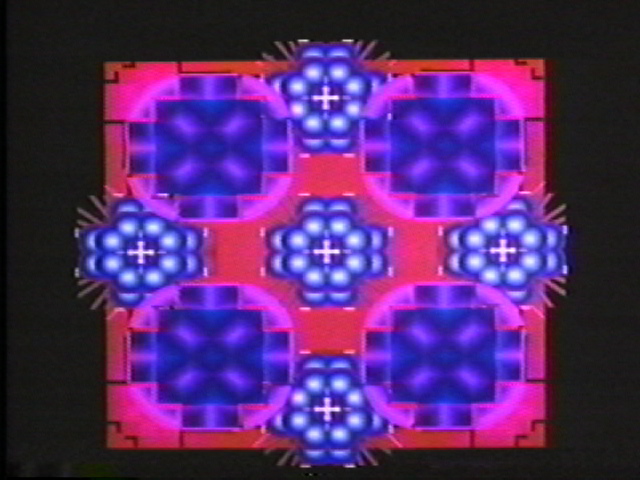
THE MAGIC EGG is a wide-ranging collection of visual segments developed by computer animation teams at various research institutes and universities across North America. These teams combined vector graphics, molecular modeling techniques and simulated time-lapse photography with the mathematical calculations needed to pre-distort images for IMAX Dome projection. The screen explodes with colour shifting patterns and model-like movement. Segments include a flight through a wire frame city, a roller coaster ride over an abstract Japanese mountain terrain and a trip through an intricate floral labyrinth. These segments, combined with the scale and three dimensionality of IMAX Dome provide the viewer with at truly unique experience marking an important first in IMAX Dome technology.

http://www.bigmoviezone.com/filmsearch/movies/index.html?uniq=112

A classic in the world of computer animation, this original digital giant screen movie has been called "a computer-graphics Fantasia (1940)." It was first presented in 1984 at the annual SIGGRAPH (Association for Computing Machinery's Special Interest Group on Graphics) convention and since then screened in museums and theme parks worldwide. The film consists of visual segments developed by teams of computer-graphics artists and programmers at various research institutes and universities across North America, perhaps most famously at the New York Institute of Technology. These teams combined vector graphics, molecular modeling techniques, and simulated time-lapse photography with the mathematical calculations needed to pre-distort images for IMAX Dome projection. Segments include the famous robotic ant of Dick Lundin, Pat Hanrahan's and Paul Heckbert's flight through a lattice of metamorphosing crystals, a roller coaster ride over an abstract Japanese mountain terrain, and a trip through an intricate floral labyrinth (designed by Ned Greene). "The Magic Egg" was originally shown world-wide in the Imax/Omnimax film format.
Fiona Kelleghan
http://www.imdb.com/title/tt0087662/plotsummary?ref_=tt_ov_pl

From a SounDisc, a flexible disc (record), that was included in Keyboard Magazine in the 80's. I have several of these but this is my favorite one. It's from a computer generated IMAX film. Couldn't find much imagery to go with it online so I alternated the one (yes, ONE) image of the title with images of the composer/performer: Michael Boddicker. I'm sure this is copyrighted but I don't know who to credit or where (or even IF) it can be bought. This is one of my all time favorite pieces of music and I still listen to it today, which is why I cleaned up the "pops and clicks" from the old SounDisc so that I could continue to enjoy it. I hope you do, too!
David Pounds